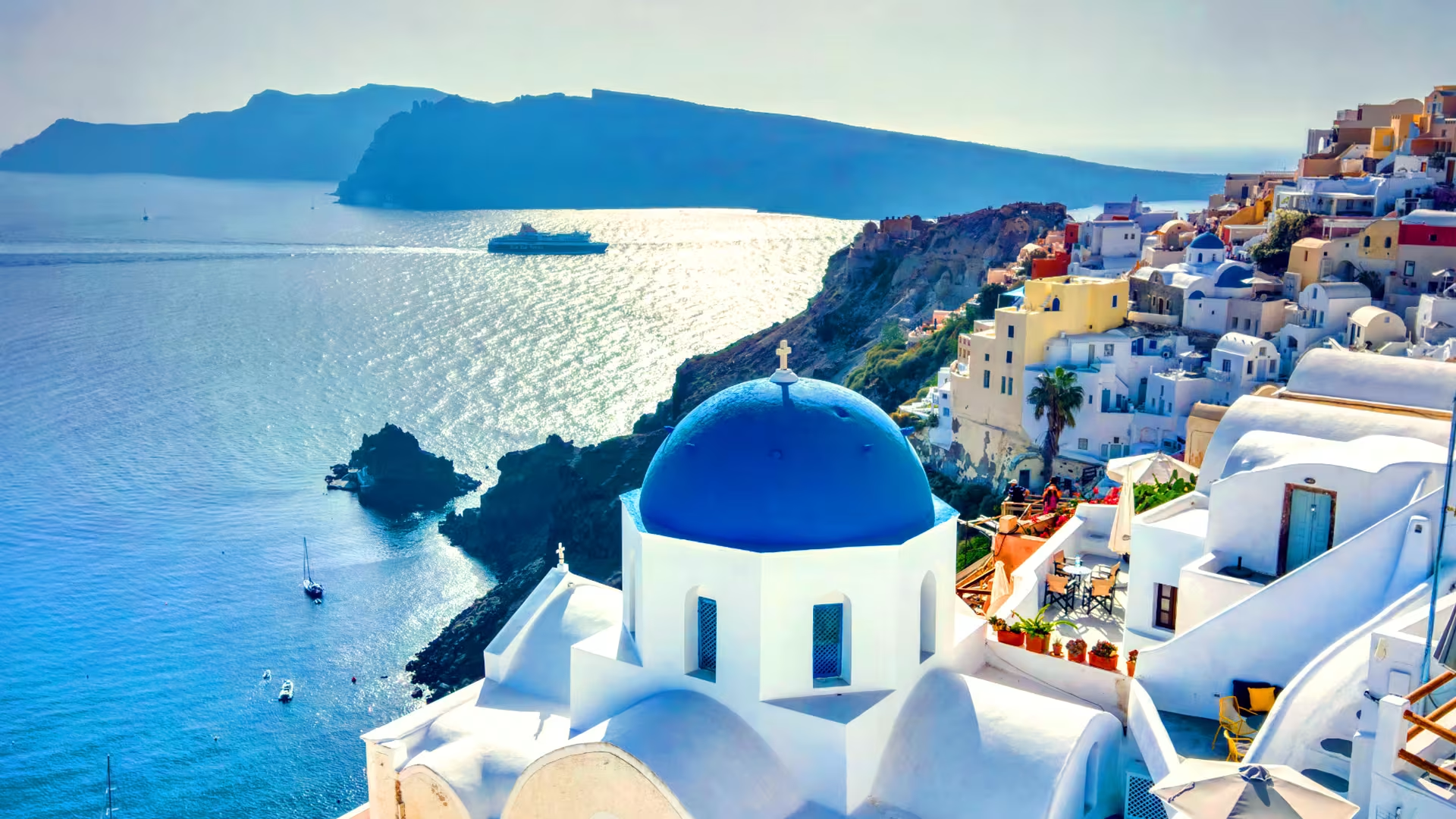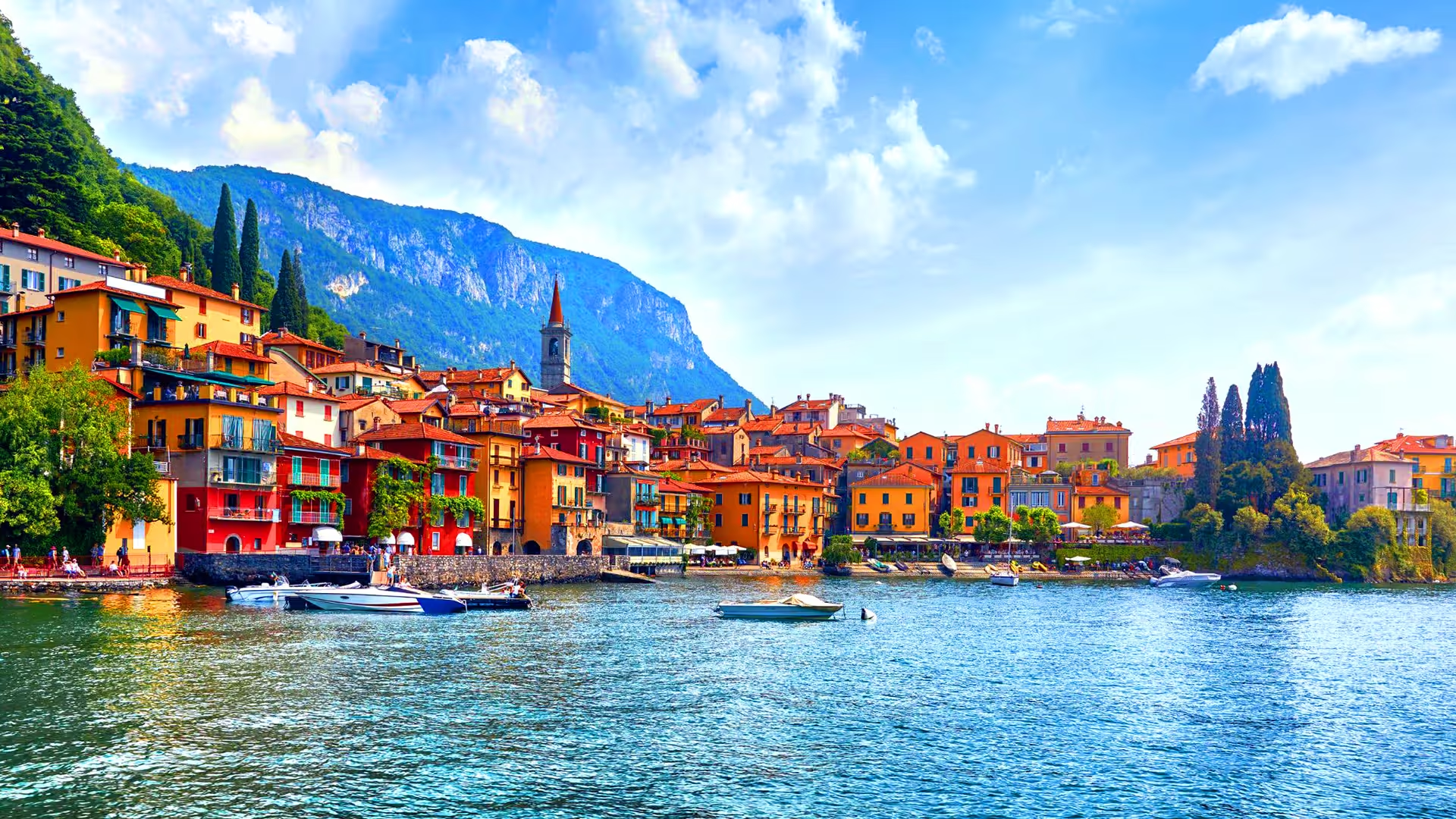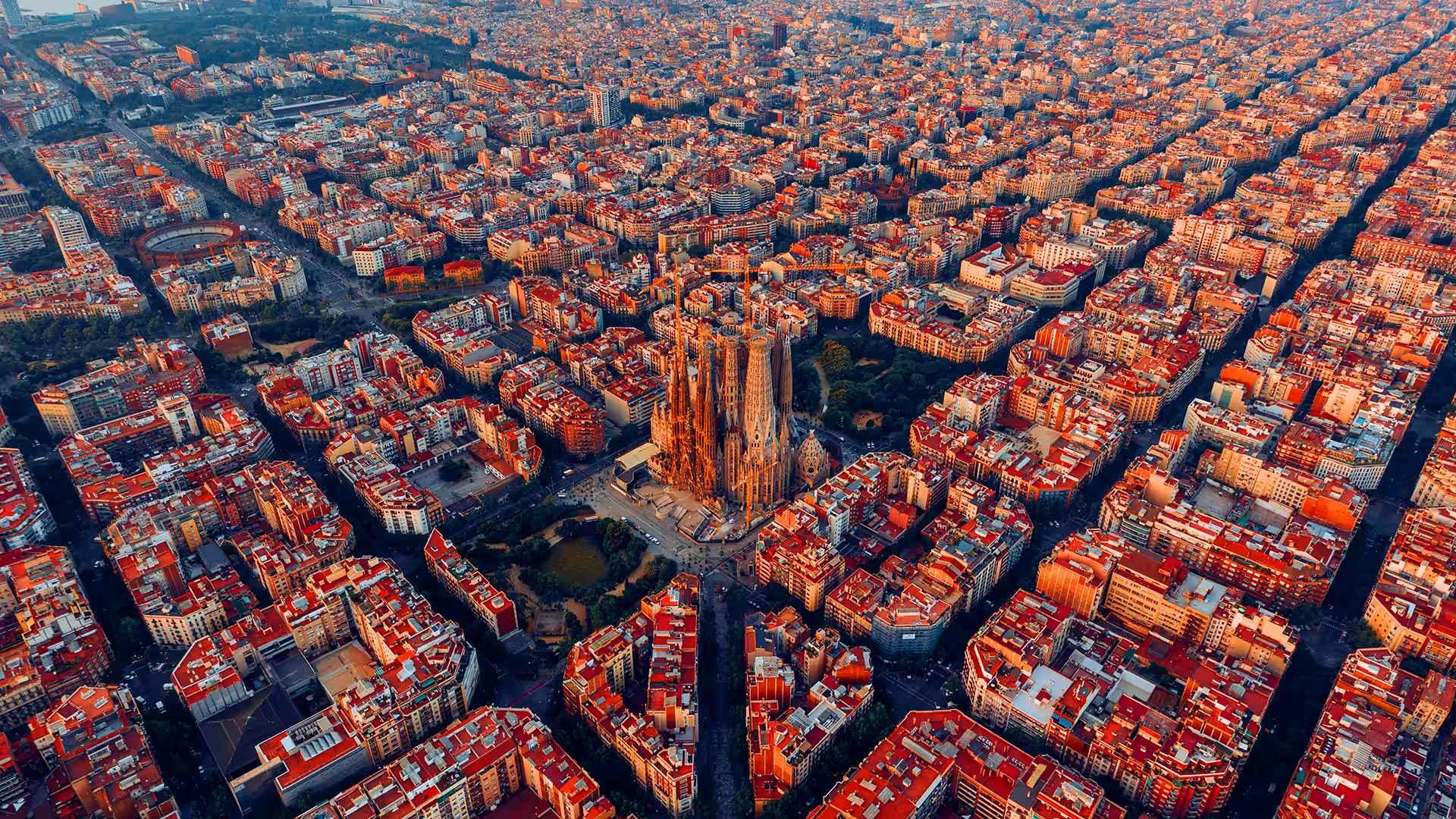
Tell most people you're planning a trip to Spain and they'll picture roughly the same thing - a stretch of coastline, a lot of sun loungers, sangria arriving faster than it was ordered. It's not wrong, exactly. It's just a fairly small slice of a country that also holds Atlantic fishing villages under grey skies, mountain passes that see snow every winter, and cities where dinner doesn't really start before ten. The gap between the postcard and the reality is precisely where the interesting trip lives.
Getting past that postcard means understanding a few things properly: how different Spain's regions really are from one another, when to go depending on what the trip is for, what tends to separate a memorable stay from a forgettable one, where to base yourself, and two island groups worth treating as destinations in their own right.
Why Spain Holds Up to Closer Scrutiny
Spain's regions don't just look different from one another - they run on different logic entirely. The Basque Country and Galicia sit under grey Atlantic skies for much of the year, their food built around seafood and cider rather than anything resembling the sun-drenched south. Andalusia, by contrast, carries the weight of eight centuries of Moorish rule in its architecture, its water gardens and its slower, siesta-shaped days. Catalonia and Valencia lean towards the Mediterranean in both climate and character, with their own language and culinary traditions layered over the top.
That range is really the argument for spending proper time here rather than skimming the coast. Luxury travel Spain rewards tends to mean choosing a single register - mountain quiet, coastal ease, city energy - and letting it define the trip, rather than trying to compress all three into one week. Luxury holidays to Spain built this way tend to leave people wanting to come back for the version they didn't choose, rather than feeling they've already seen it all.
When to Go - Reading Spain's Weather Properly
Ask about the best time to visit Spain and the honest answer depends entirely on where in the country you mean. Spain weather shifts more sharply by latitude and altitude than most first-time visitors expect - the green north stays cool and unpredictable even in August, while Andalusian cities such as Seville and Córdoba can push comfortably past 40°C in high summer, better suited to early starts and long shaded lunches than midday sightseeing.
Spring, roughly April into June, tends to offer the most forgiving conditions across the mainland - wildflowers still out, temperatures warm rather than punishing, and the countryside holding onto its colour before the summer dust sets in. Autumn mirrors this in reverse, with September and October keeping much of summer's warmth while the crowds thin considerably, and harvest season adding its own draw in wine country. Winter softens dramatically in the south, where mild days make it a genuine off-season option, in sharp contrast to the Pyrenees and northern Castile, where snow settles in early and stays through the season. Checking spain weather patterns by region before booking, rather than assuming one climate covers the whole country, saves more disappointment than almost any other piece of planning.
What Makes a Trip Feel Considered Rather Than Booked
The difference between a good week in Spain and a forgettable one rarely comes down to the sights on the itinerary - it comes down to what happens around them. A market stallholder who sets aside the last of the morning's figs because you asked the right question. A bodega owner who opens the cellar simply because the timing worked out, rather than because a tour was scheduled. Arriving in a hill town like Ronda or Úbeda outside the day-trip window, when it belongs again to the people who actually live there.
Food carries a good deal of this weight. Galician seafood, cooked with almost nothing added to distract from it; Basque pintxos built for slow grazing across an evening rather than a fixed menu; rice dishes along the Valencian coast that go well beyond the paella most visitors expect walking in. Wine follows a similar logic - Rioja, Ribera del Duero, Priorat and Jerez are distinct enough from one another to justify separate detours rather than a single generic "wine region" stop. This is where luxury travel spain genuinely earns the description: not extravagance for its own sake, but private access before opening hours, a boat arranged for an unstructured afternoon on the Costa Brava, a cooking session in someone's actual kitchen. Wellness culture runs deep here too, particularly along the Andalusian coast, where spa traditions still draw on centuries-old Moorish bathhouse design.
Where to Stay - Letting Region Decide
Accommodation across Spain splits into a handful of genuinely different characters, and the strongest trips let the region dictate the style rather than the other way round. Along the southern coast and inland Andalusia, converted fincas and cortijos - working farmhouses reimagined as private stays - offer pools, olive groves and the kind of privacy that suits a family or group wanting a house answerable to nobody else's schedule. Luxury villas in Spain cluster particularly around the Costa del Sol, Mallorca and the hills above towns such as Ronda, often with staff able to arrange a private chef or a boat at short notice.
City stays ask for something different. In Madrid, Barcelona, Seville and San Sebastián, the strongest options tend to be smaller, design-led properties folded into converted historic buildings - a former palace, a merchant's townhouse - trading scale for character and a genuine sense of place. Along the coast more broadly, luxury hotels in Spain increasingly favour understated architecture and locally sourced materials over anything overtly grand, terraces angled towards the sea rather than the car park. For anyone still weighing up the best places to stay in Spain, the honest starting point is region first, property type second - a villa suits a group wanting to disappear into the Andalusian countryside for a week; a boutique city stay suits a shorter, more social trip built around food, architecture and evenings that start late and run later still.
Two Island Groups Worth Their Own Trip
The Balearic Islands
Mallorca, Menorca, Ibiza and Formentera sit close enough to the mainland to feel like an extension of it, yet each has grown its own distinct temperament. Mallorca offers the widest range in one place - mountain villages tucked into the Tramuntana range, a genuinely handsome old capital in Palma, and coves quiet enough in the north to feel private even mid-season. Menorca moves slower still, its coastline threaded with small, largely unmarked calas, protected by planning rules strict enough to have kept large-scale development at bay. Ibiza's nightlife reputation is fair, but its interior - whitewashed hill towns, a UNESCO-listed old quarter in Dalt Vila - rewards anyone willing to look past it.
Sea temperatures peak from July into early autumn, so the best time to visit Balearic Islands for swimming actually lands a little later than the mainland's shoulder-season sweet spot; May and June suit walking and sightseeing better than the water. Anyone piecing together luxury Balearic Islands holidays is generally better served choosing a single island's character to build around than treating the group as one interchangeable destination.
The Canary Islands
Sitting closer to North Africa than to the Spanish mainland, the Canaries run on an entirely different climate logic - subtropical and largely stable across the year rather than swinging hard between seasons. Tenerife pairs volcanic drama with genuine variety, from black-sand coves to the heights of Mount Teide; Lanzarote's more recent volcanic activity has left it with an almost lunar starkness, one that architect César Manrique shaped much of the island's built character around; Gran Canaria compresses beach, mountain and the old town of Las Palmas into a single, compact island.
Because the weather barely shifts through the year, the best time to visit Canary Islands comes down more to crowds and price than to climate - spring and autumn match peak-season warmth with noticeably fewer visitors, while winter draws travellers chasing reliable sun when the rest of Europe has gone grey. That consistency makes the islands a natural fit for luxury Canary Islands holidays built around walking, sailing, or simply escaping a northern winter for a while.
Bringing It Together
Spain doesn't really ask a traveller to pick a single version of itself - it offers several, sitting close enough together that a week can hold an Andalusian hill town and end on a Balearic cove without ever feeling like two separate trips. What matters is being honest about which register actually suits the visit: mountain or coast, city evenings or quiet countryside, mainland depth or island stillness. However that decision falls, it's exactly this range that Travoluxury has spent time building its Spain collections around, matching each region's particular texture to the kind of trip most likely to be remembered rather than simply completed.
.avif&w=3840&q=75)